
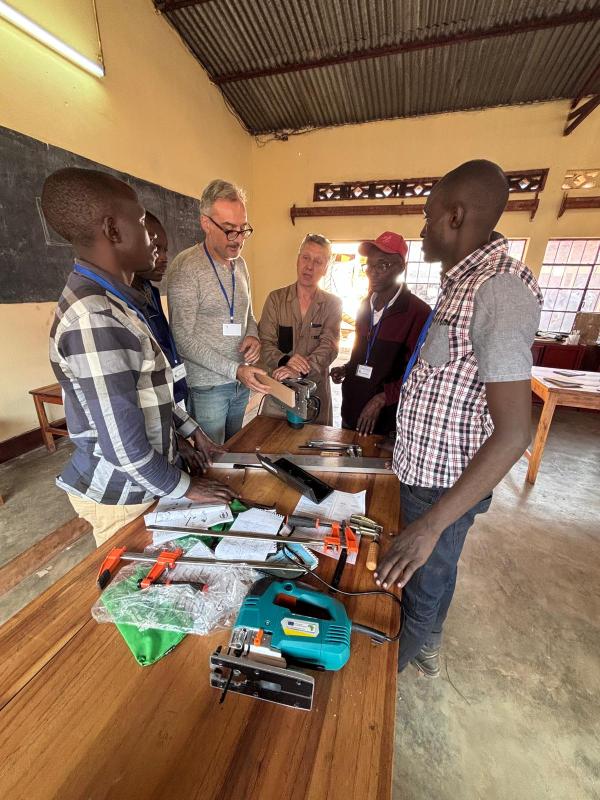
V2SDF curriculum week integrates woodworking machinery training for the production of efficient solar ovens.
A comprehensive approach to sustainable technology values diverse materials and the skills to work with them. In line with creating a holistic training course, the V2SDF project this week expanded its technical scope to include another vital renewable energy solution.
From July 28th to August 1st, 2025, during the dedicated curriculum development week at the LTCR Mushasha pilot workshops, educators from CEM Gitaba, CEFORE Rusi, and LTCR Mushasha engaged in specialized practical training. Alongside drafting manuals, they received instruction on the use of various woodworking machinery for the fabrication of solar ovens.
This hands-on session equipped teachers with the knowledge to safely and effectively operate tools such as table saws, planers, and routers. The training focused on techniques for cutting, jointing, and shaping wood to construct the well-insulated boxes and precise frames that are central to effective solar oven design, complementing their existing metalworking skills for parabolic cookers.
Why Woodworking Skills Complete the Training Portfolio:
Diversifying Technological Solutions: Solar ovens (box-type) are a crucial and complementary technology to parabolic cookers, often used for slower, baking-style cooking. Mastering their fabrication broadens the range of solutions educators can offer.
Material Expertise: Working with wood requires a different skill set than metalwork, including understanding grain, joinery, and insulation principles. This training makes the educators versatile technicians.
Enriched Curriculum: This practical experience directly informs the development of the training manuals, ensuring the solar oven modules contain accurate, safety-focused, and practical guidance for students.
Integrating woodworking into the program underscores a key project strength: building adaptable, multi-skilled vocational trainers. The educators are now developing the capability to guide students through the manufacture of two distinct but complementary solar thermal devices, significantly increasing their impact on local clean cooking adoption.
By embracing both metal and wood, the V2SDF project is ensuring that the vocational education it fosters is as robust and versatile as the sustainable technologies it aims to propagate.
#V2SDF #VetToStopDeforestation #SolarOven #Woodworking #VocationalTraining #CurriculumDevelopment #RenewableEnergy #CleanCooking #Burundi #SustainableTechnology #Carpentry #TeacherTraining #CapacityBuilding #HandsOnLearning